Staying Safe While Cooking Outdoors: Essential Precautions
Grilling means direct heat; smoking uses indirect heat at about 250–300 °F in a covered cooker. Knowing this difference helps you match…
Grilling means direct heat; smoking uses indirect heat at about 250–300 °F in a covered cooker. Knowing this difference helps you match method to meat and manage both heat and fire risk.
Keep raw and ready-to-eat foods separate, marinate in the refrigerator, and if you reuse a marinade from raw meat, bring it to a rolling boil for at least one minute. Use a thermometer to verify safe internal temperatures and avoid partially cooking then finishing later.
Pack perishables in an insulated cooler at or below 40 °F and keep the cooler shaded. When food is ready, hold it at 135 °F or warmer until serving. Choose approved grills and heat sources, place them in well-ventilated, non-flammable areas, and skip makeshift metal containers that can contaminate food.
This guide gives practical, step-by-step tips on gear, placement, flare-up control, and quick responses if a fire starts. Follow small habits that protect people and property while you enjoy flavor and fun at home.
Key Takeaways
- Grilling uses direct heat; smoking uses low, indirect heat (250–300 °F).
- Marinate refrigerated; boil reused marinades before using.
- Keep perishables ≤40 °F in coolers; keep cooked food ≥135 °F.
- Use approved grills and place them in ventilated, non-flammable spots.
- Use a thermometer and avoid partial precooks—finish on the grill.
- Know how to control flare-ups and act fast if a small fire starts.
Outdoor cooking basics: set your space up for safe grilling
Start smart: position the grill on a firm, non-flammable surface at least ten feet from the house or railings. This distance helps keep sparks, embers, and heat from reaching siding, furniture, or hanging plants.
Choose a stable location and keep the grill away from the home
Flat, solid footing—stone, pavers, or concrete—prevents wobble or rolling. Use only approved equipment and never use makeshift metal containers that can leach chemicals when heated.
Prioritize ventilation and check weather conditions, wind, and heat
Work in well-lit, well-ventilated areas. Check the weather and wind direction so flames or smoke won’t drift into hazards. In strong wind, angle vents, and position the cooker away from traffic paths.
Create a kid- and pet-free zone around hot grills
Set a three-foot “no-go zone” around the grill and enforce it while metal stays hot. Keep tools, mitts, and a fire extinguisher close so you can act without leaving the station.
“Clear the area, verify clearance, and do a 360-degree scan before lighting.”
| Risk | Quick action | Best surface | Notes |
|---|---|---|---|
| Sparks near siding | Move grill away; wet down nearby debris | Concrete or pavers | Keep grill at least 10 ft from structure |
| Wind-driven flames | Close vents and shield; reposition | Level, non-flammable | Angle vents away from people |
| Hot coals or ash | Store in metal container once cool | Spark-resistant mat under grill | Avoid sweeping hot coals onto combustible materials |
| Children or pets near fire | Enforce no-go zone; use barriers | Clear perimeter | Long-handled tools reduce trips near hot surfaces |
Essential Safety Precautions for Outdoor Cooking
Before you light the grill, gather a few key tools that keep the cook steady and the flames controlled.
Have the right gear. Stock a dry-chemical fire extinguisher within arm’s reach and keep flame-resistant mitts plus long-handled tongs at the ready. Add a small spray bottle for minor flare-ups and a baking sheet or large lid to smother brief sparks.
Never leave a lit grill unattended. Plan your time and prep so one person can watch the station. When you must step away, have someone else take over the lead. This simple practice prevents most accidents during grilling.
Keep flammables—oils, paper goods, and aerosol cans—well away from heat. Inspect equipment before use: check handles, loose heads, and cracked grips. Reserve separate tools for raw and cooked food to avoid cross-contamination.
Keep children and pets out of the hot zone and traffic path near grill. Clear rules and a physical barrier help prevent bumps, burns, and tip-overs.
| Item | Why it helps | Quick action |
|---|---|---|
| Dry-chemical fire extinguisher | Fights small grease and fuel fires | Use when flames spread; call 911 if uncontrolled |
| Heat-resistant mitts & long tongs | Keep hands away from high heat and popping grease | Wear when handling hot grates or food |
| Spray bottle / lid / baking sheet | Control minor flare-ups without chemicals | Smother or mist small flames; never squirt water on grease |
| Organized station & checklist | Reduces rush and distraction | Verify extinguisher, mitts, and cleared perimeter before lighting |
Grill safety by fuel type: gas, charcoal, and electric best practices
Before you light, do a quick, fuel-specific check. Inspect visible parts and clear debris so the cook runs smoothly. Small checks cut the chance of leaks and flare-ups.
Gas grills: Check the gas line, regulator, and hoses for cracks or loose fittings. Do a soapy-water leak test on connections and the gas grill manifold. Confirm knobs turn freely and igniters spark; if the grill ties into a home line, schedule periodic professional inspections.
Charcoal grills: Use a chimney starter or an electric lighter to start coals. Never add lighter fluid to hot coals or use accelerants that ruin flavor. Let coals ash over (10–20 minutes), then bank and add briquettes hourly to hold a smoker-style temperature near 250–300 °F when needed.
Electric grills: Use outdoor-rated extension cords and route them so they stay dry and out of walkways. Plug into a GFCI-protected outlet and avoid using damaged cords or adapters.
Grease and debris: Scrape grates, clean burners and barriers, and empty drip trays often. Accumulated grease feeds flare-ups and fires. Treat fuel sources respectfully: store propane upright outdoors and discard cold ash in a sealed metal container.
| Fuel type | Key checks | Quick action |
|---|---|---|
| Gas | Hoses, gas line, regulator, igniter | Soapy leak test; shut off supply if leak found |
| Charcoal | Chimney starter, ash level, briquette supply | Use starter; never add lighter fluid to hot coals |
| Electric | Cord rating, GFCI outlet, dry connections | Replace damaged cords; keep plugs elevated |
| General | Grease trays, burners, equipment condition | Clean often; empty trays to reduce fires |
Food prep the safe way: keep raw and cooked foods separate
Set up a clear lineup so raw proteins stay apart from ready-to-eat plates and utensils. Use labeled containers and color-coded products so helpers know which tools to touch.
Marinate in the refrigerator and never leave raw marinades at room temperature. If you plan to baste with liquid that touched raw meat, bring it to a rolling boil for at least one minute before using.
Transport perishables in an insulated cooler kept at or below 40 °F. Pack raw items in sealed bags, double-bag to stop leaks, and place them on the bottom. Keep drinks in a separate cooler to avoid warming the food compartment.
- Only remove the amount you’ll grill immediately; keep the rest chilled.
- Use separate platters, tongs, and thermometers for raw and cooked items.
- Store coolers in shade, layer with ice packs, and limit lid openings to hold temperature.
- When running water is not handy, have wet wipes and a small water jug for handwashing.
Plan prep and time at the grill so cross-contact never happens. These simple tips protect flavor and keep everyone healthy while you enjoy the meal.
Cooking with confidence: temperatures, tools, and timing
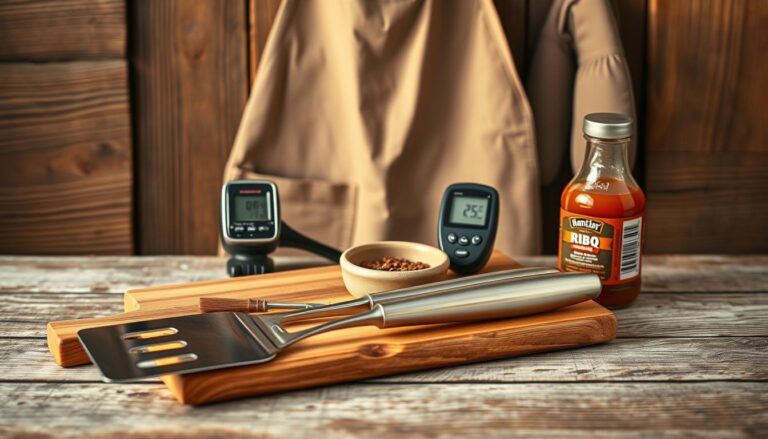
Let a digital thermometer guide your finish times so food reaches safe internal temps without overcooking.
Use a digital instant-read thermometer and insert the probe into the thickest part of the cut, away from bone. This is the only reliable way to confirm internal temperature and avoid guesswork.
Target temps and rest times
- Whole cuts of beef, pork, lamb, and veal: 145 °F and rest 4 minutes.
- Ground, injected, or mechanically tenderized meats: 155 °F.
- Poultry (chicken, turkey): 165 °F; check the thickest part and thigh on large birds.
Timing, tools, and technique
Avoid piercing meat with forks; long-handled tongs keep juices and reduce the chance of moving surface bacteria inward.
Manage heat in zones: sear over high heat, then finish over indirect heat so the outside doesn’t char before the center hits target temperature.
Apply sauces during the last 15–30 minutes to protect flavor and prevent sugars from burning.
Low-and-slow, grease control, and staging
If you use a smoker, maintain a steady 250–300 °F and add briquettes hourly to hold even heat.
Watch grease buildup on long cooks; clear drip trays and scrape grates to reduce flare-ups. Use carryover heat—pull meats a few degrees early and let them rest—while keeping finished food at 135 °F or warmer if you stage before serving.
Fire prevention and response: manage flare-ups, heat, and fuel safely
Plan how you’ll handle sudden flames and hot embers so you can act quickly and calmly.
Stay proactive: keep a charged dry-chemical fire extinguisher within arm’s reach and rehearse how to use it with family. A short drill helps everyone move without panic if a small fire starts.
Small flare-ups often respond to a closed lid or a light mist from a spray bottle that starves the flame of oxygen. Never use water on a grease fire—water spreads flaming oil and makes fires worse.
If grease ignites, smother flames with baking soda or use a Class B fire extinguisher. For a gas grill, shut off the burners and the tank valve if you can do so safely; if you cannot, step back and call the fire department.
“Keep a clear perimeter and the extinguisher ready; a practiced action beats panic.”
- Clear drips and avoid overfilled trays—fuel buildup feeds fires.
- Dispose of coals only when cold; store in a sealed metal container away from structures.
- Keep guests, kids, and pets well away and angle the grill away from traffic paths.
| Issue | Immediate action | Preventive tip |
|---|---|---|
| Minor flare-up | Close lid or mist with spray bottle | Clean grates and empty drip tray regularly |
| Grease fire | Smother with baking soda or use Class B extinguisher | Do not use water on grease fires |
| Gas grill fire | Turn off gas supply if safe; evacuate and call 911 if not | Inspect hoses and valves before each use |
| Hot coals | Let cool fully, then store in metal container | Allow 48 hours or until cold to the touch |
Serving outdoors and handling leftovers
Plan the finish line. Set a serving area that keeps hot trays warm and raw platters separate. This helps guests serve safely and cuts cross-contact risks.
Keep cooked food hot and move leftovers quickly
Hold finished items at 135 °F or warmer by staging them on the cool side of the grill, using an oven set to 200 °F, a slow cooker, a chafing dish, or a warming tray.
Use clean platters and dedicated utensils when you remove food from the grill. Never return cooked items to a plate that held raw meat.
- Refrigerate within four hours, or within two hours when ambient temps exceed 90 °F.
- Pack leftovers in shallow, food-safe containers to speed cooling; label with date and time.
- Transport food off-site in a cooler packed with plenty of ice or ice packs.
- Keep a separate “leftovers cooler” so drink traffic doesn’t warm stored food.
“Stage, cover, and chill quickly; a simple routine keeps flavor and reduces waste.”
| Action | Temp / Time | Materials / Products | Notes |
|---|---|---|---|
| Holding finished dishes | ≥135 °F | Warming tray, chafing dish, oven | Keep lids on between servings to hold heat |
| Cooling leftovers | Refrigerate ≤4 hrs (≤2 hrs if >90 °F) | Shallow containers, labels | Leave space between containers to cool faster |
| Transporting home | Under 4 hrs off-grill | Dedicated cooler, ice packs | Seal and separate cooked food from raw items |
| Reheating at home | Steaming hot throughout | Oven, microwave, stove | Discard food left out beyond recommended time |
Share a few quick tips with guests, like using serving utensils instead of fingers and keeping the buffet shaded and covered between helpings. A short clean-up—wiping counters, sealing containers, and refreshing ice—finishes the meal with less stress at home.
Conclusion
A quick two-minute review of gear, placement, and conditions sets the tone for a smooth session. Keep a strong, simple checklist at hand: confirm vents, check probe batteries, verify gas and charcoal supplies, and position the grill well away from structures.
Match method to menu—use a smoker at 250–300 °F when low-and-slow fits the plan, or direct heat for fast grilling. Track internal temps (rest meats the recommended min) and hold finished food at 135 °F or warmer. Regular inspections, tidy fuel storage, and watching grease cut the chance of fires.
Make grill safety part of the ritual at home: assign roles, learn from manuals, and end each cook with a tidy shutdown and two-minute scan so flavor and calm travel with every meal.