Unlock the Secrets of Smoking Ribs Like a Pro
Ready to get consistent, tender ribs every time? This short guide breaks down simple, pro-level steps you can follow in any backyard…
Ready to get consistent, tender ribs every time? This short guide breaks down simple, pro-level steps you can follow in any backyard or competition setup. Low-and-slow cooking at 225–250°F is the core idea used by championship teams and pitmasters.
Prep matters: remove the membrane, apply a dry rub ahead of time, and stabilize your smoker before you add meat. A water pan helps smooth temperature swings, and charcoal with apple, hickory, or oak gives clean smoke without overpowering pork.
You’ll learn practical methods like 3-2-1 and 3-1-1, when to wrap, and how to test for doneness with a bend test or a toothpick instead of clock-watching. Finishing unwrapped sets the bark and lets you glaze lightly without burning sugars.
Beyond ribs: these tips also build confidence for brisket and other barbecue cuts. Follow this guide to control heat, manage time, and deliver perfect ribs without guesswork.
Key Takeaways
- Low-and-slow at 225–250°F gives steady heat and reliable results.
- Prep like pros: remove membrane and rub early for better smoke flavor.
- Use a water pan and charcoal plus hardwoods to stabilize and flavor.
- Cook to tenderness; use tactile tests instead of strict timing.
- Wrap smart, finish unwrapped, and glaze near the end to protect bark.
- Techniques for ribs sharpen skills for brisket and other BBQ cuts.
Set Up for Success: Cuts, Gear, Rubs, and Wood for Smoking Ribs
Choosing the correct cut and getting your smoker gear ready sets you up for steady heat and better flavor. Pick racks with even thickness and visible marbling so they cook predictably in a ribs smoker.
Choose your rack
Baby back ribs are leaner and cook a bit faster because of their curved bones. Spare ribs are larger and fattier, so they reward longer cooks with deeper bark. St. Louis-style ribs are trimmed spare ribs with a uniform shape for even heat.
Prep like a pro
Trim ragged edges, then remove the membrane on the bone side. This helps smoke and rub penetrate and makes the finished pork easier to bite cleanly.
Build a balanced rub—brown sugar, paprika, garlic, onion, and a pinch of cayenne—so the crust caramelizes without masking meat flavor. Let the rub rest at least one hour before placing racks on the smoker.
Smoker, fuel, and wood choices
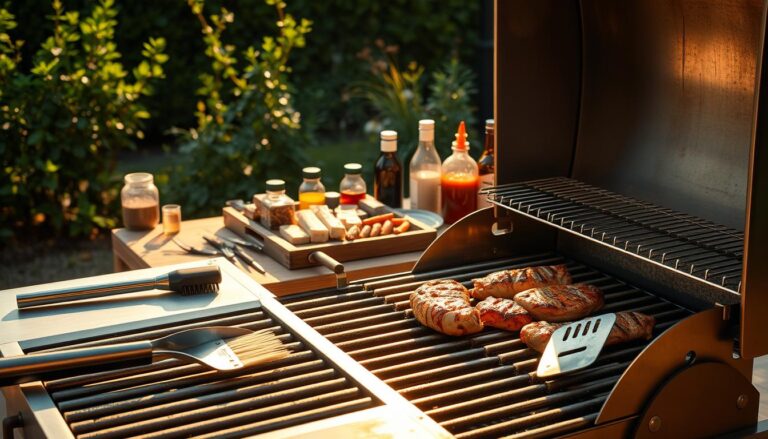
Set up for indirect heat with charcoal as your steady base and a water pan to smooth temperature swings. Hold a stable temperature of 225-250°F with a digital thermometer for reliable long cooks.
Pick wood by personality: apple for gentle sweetness, hickory for classic punch, oak for backbone. Mix small amounts to tailor smoke without oversmoking; spare racks can handle a bit more smoke than baby ones.
“Good prep and steady heat take more cooks to perfect than fancy gear.”
- Plan fuel and wood additions so you maintain heat over hours.
- Manage airflow for clean, thin smoke to protect the rub and flavor.
Mastering the Art of Smoking Ribs: A Step-by-Step How-To Guide
A reliable routine—steady smoke, measured hours, and tactile checks—wins more than guesswork. Start by stabilizing your cooker at 225–250°F with a water pan and a clean-burning charcoal base. Resist opening the lid often; each peek dumps heat and costs time.
Stabilize the cooker
Preheat to about 250°F and watch vents for steady airflow. Small charcoal top-ups keep smoke clean and temperature even during long smoke hours.
Pick a method and when to use it
The classic 3-2-1 (three hours smoke, two wrapped, one unwrapped) makes very tender meat but can soften bark and mute rub.
The 3-1-1 reduces steam time in foil to protect texture and flavor. For baby racks, cut the first smoke hour (2-1-1). For spare ribs and St. Louis-style, 3-1-1 at ~250°F is reliable.
Timing, texture, and doneness cues
Use minutes and tactile checks more than a strict clock. A toothpick should slide in with light resistance between bones. Lift one end and look for a slight crack in the center—this bend test is your best cue.
Wrapping options and moisture
When you wrap ribs, use heavy-duty foil and place meat-side down. Add about 1/4 cup apple juice or cider and a few thin butter pats to keep moisture without washing off seasoning.
Reserve the foil juices and reduce them for a finishing glaze if you like. Apply sauce or sweet glazes late and watch temperature to avoid burning sugars.
Adjustments by cut
Shorten smoke hours for baby backs so they don’t over-tenderize in foil. Let spare ribs run the full blocks to render fat and build bark. If you removed the membrane during prep, your tests and smoke adhesion will be more consistent.
“Control temperature and time, and trust feel over the watch.”
Finish Like a Pitmaster: Sauces, Glazes, and Troubleshooting Tender Ribs
Finish strong with smart sauce timing and simple checks that keep flavor bright and bark intact.
Decide between a glossy glaze or a classic barbecue sauce finish. Thin glazes made from reduced foil liquid concentrate flavor. A light coat of bbq sauce adds sweet-tang familiarity.
Apply sauce in the last 20–30 minutes at low heat so sugars caramelize without scorching. If you want sticky texture, add a second thin pass in the final few minutes and watch closely to prevent burn.
Sauces, doneness, and rest
Use tests, not just time: a toothpick should slide in with gentle resistance and the bend test should show a clean crack between bones. Let racks rest about 10 minutes off the smoker to relax juices and keep ribs tender.
Troubleshooting common issues
If bark is mushy or the rub tastes washed out, you likely spent too long in foil. Shorten the wrapped phase and finish uncovered to rebuild texture.
- Stabilize your smoker and use a water pan to stop heat swings.
- For sweet sauces, monitor minute by minute and rotate slabs to avoid hot spots.
- If meat seems dry, brush reduced liquid or a splash of juice in the last minutes to restore moisture.
“Good pit control that makes brisket shine will also deliver balanced, flavorful ribs.”
Conclusion
A calm smoker, predictable temperature, and small, smart adjustments make consistent results possible.
Keep temperatures near 225–250°F, pick wood like apple, hickory, or oak, and use a flexible method guided by feel more than the clock. For baby racks shorten the first smoke; for spare ribs try 3-1-1 at about 250°F.
Rest briefly, sauce late, and hold finished racks in loose foil if plans change. Log each cook and tweak one step at a time—wrap timing, smoke hours, or wood blend—to dial in flavor.
With steady pit control and these simple tips, you’ll deliver perfect ribs and build skills that transfer to brisket and other barbecue cuts every time.