Elevate Your BBQ Experience: 5 Ways to Enhance Your Grilling
Make this summer’s backyard cookout feel effortless. A great gathering mixes bold flavor, smart setup, and relaxed time with friends. This intro…
Make this summer’s backyard cookout feel effortless. A great gathering mixes bold flavor, smart setup, and relaxed time with friends. This intro promises practical tips and fresh ideas that help you spend more time chatting and less time hovering over the grill.
We’ll cover five core moves — setup, steady temps, flavor strategies, handy hacks, and menu planning for all kinds of meat and sides. Learn portion planning, simple sauce tricks, and buffet flow so hot mains land at the right moment.
Small shifts make a big difference. Shaded seating, string lights, and a chilled drink station cut friction and lift the vibe. Expect fast-reference temps, stress-saving hacks, and a sweet finish that keeps memories (and leftovers) alive after the last bite.
Key Takeaways
- Clear, practical tips that let hosts relax with friends.
- Five focused areas: setup, temps, flavor, hacks, menu.
- Portion and timing advice for brisket, ribs, chicken, and sausage.
- Simple flavor boosts: seasonings, smoke, and finishing sauces.
- Buffet flow and seating ideas for a smooth summer gathering.
Set Up Your Grill and Smoker for Success
Set your gear and fuels right, and most problems vanish before they start. A quick setup pays off with steadier heat and fewer surprises. These steps help you prep the grill and smoker so cooks run smoother and plates arrive on time.
Cleaning smarter: foil-in-tongs and onion rub for a nonstick grate
While the grate is warm, crumple a ball of foil in long tongs and scrape off residue. Follow with a halved onion wiped across the bars. This DIY trick breaks down gunk and leaves a light film that helps food release.
Fuel and heat management: charcoal, wood, propane, and hot-start checks
Do a quick propane reality check by pouring hot water down the tank side. The metal feels cool where fuel remains and warm above the fill line. Top off charcoal or wood before lighting so you never run low mid-fire.
Low and slow vs. hot and fast: dialing in temperature for different cuts
Preheat until grates are hot; a hot surface gives better sear and fewer flare-ups. Keep essentials at hand — long tongs, a reliable thermometer, a basting mop, and gloves — for safe, fast cooking.
- Low slow (225–250°F) suits brisket and ribs.
- Hot-and-fast (300–350°F) works for sausage and chicken thighs.
- Build two zones: direct for sear, indirect for finish, and steady vents on a smoker to hold temperature.
Master Temperature and Doneness for Juicier Meats
Nailing internal temps is the single best move for consistently juicy plates. Keep pit and internal readings in sync, and you’ll tame tough cuts while keeping lean pieces moist.
Target temps for common cuts
Lock in juiciness with precise targets: brisket at about 195–205°F, pork ribs near 190°F, and sausage to 160°F. Run low slow around 225–250°F in your smoker so collagen melts and texture turns tender.
Thermometer and touch
Use a reliable thermometer—insert in the thickest part and avoid bone. Spot-check larger meats in a few places to avoid overcooking. Limit repeated probing so juices stay put.
- Stabilize heat: manage vents and the fire bed with small adjustments.
- Watch the stall: patience during a brisket stall preserves flavor and texture.
- Resting: let cuts rest for carryover heat and juice redistribution before slicing.
For quick reads on steaks and thinner cuts, the finger-test is a handy alternative once practiced. These simple tips make grill sessions less stressful and more consistent.
Flavor First: Rubs, Marinades, Mop Sauces, and Smoke
Start flavoring early so spices and smoke can build deep taste in every bite. Build taste from the start with a rub of black pepper, paprika, garlic, salt, and a calibrated touch of heat. Let that seasoning rest for several hours or overnight for larger cuts.
Layering seasoning and aromatics
Simple salt draws moisture in, pepper gives bite, paprika adds color, and garlic adds depth. Add sprigs of rosemary or sage during the cook for herbal lift. Use oak, hickory, or fruit woods like peach prunings for subtle sweetness in the smoker.
Mop and sauce strategy
Use a thin mop sauce during long cooks to build bark and keep surfaces supple without washing off dry rubs. Reserve sweet, sticky sauces for the final 10–15 minutes so sugars gloss the meat without burning.
- Match sauce to meat: mustard-based for pork, white sauce for chicken, classic red for brisket.
- Keep variety at the table: multiple sauces let guests tailor flavor and lift hospitality.
- Smoke clean: aim for thin, blue smoke—heavy smoke can make dishes bitter.
These practical seasoning tips and ideas help each cut and cooking method shine while grilling and smoking.
Ways to Enhance Your BBQ Experience with Smart Cooking Hacks
Smart, simple moves turn ordinary grilling into a calm, consistent process. These quick tips save time, protect flavor, and cut fuss so hosts focus on guests, not gear.
Keep burgers juicy
Press a small butter pat into the center of each patty or tuck a few ice chips right before sealing. The butter melts and the ice adds a tiny burst of moisture without dragging out the cook time.
Faster hot dogs and better sauce hold
A spiral cut on hot dogs speeds cooking and makes grooves that catch condiments. The extra surface caramelizes well and looks more finished on the plate.
Even sausages and safer cooks
Poach sausages gently first. That renders some fat, reduces flare-ups, and helps meat heat evenly when they hit the grate.
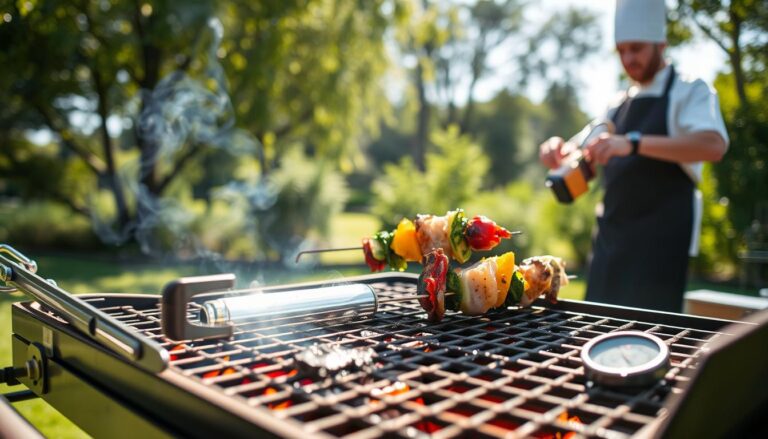
- Double-skewer kebabs: thread on two skewers so pieces don’t spin when flipped.
- Quick cleanup: a foil ball in tongs and an onion rub keep grates ready for the next round.
- Set a small safe zone on the grill for delicate items and sort small things—tongs, thermometer, skewers—into a caddy before service.
Bonus: try a quick reverse sear for steaks or thin cuts—indirect heat first, then a hot finish for a tender, browned result. These hacks make the whole recipe easier and repeatable each weekend.
Choose the Right Cuts and Plan Portions for Your Guests
Pick cuts that fit your timeline and appetite, then plan portions so plates arrive without last-minute scrambling.
Start with a short list of dependable mains and work backward from portions. Plan roughly ½ pound of cooked meat per adult guest. That keeps portions honest and avoids waste.
Backyard all-stars
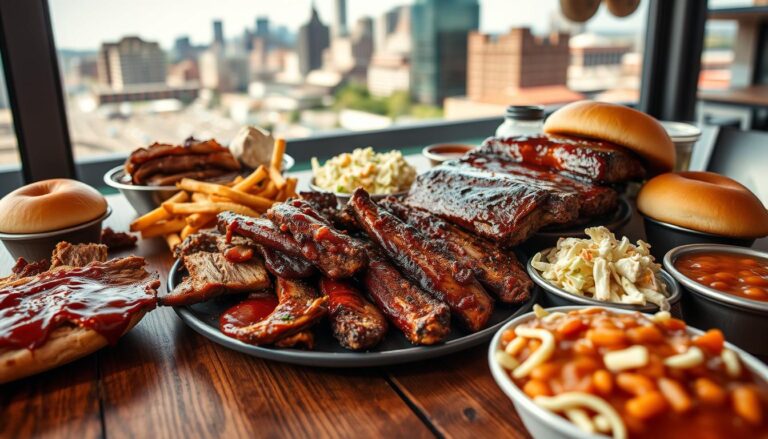
Build the menu around brisket, pork ribs, chicken thighs, and sausage links. Add a steak or beef ribs for a special flourish. Consider pork belly burnt ends or pulled pork when you need a high-yield meat.
Portioning and planning
- Match cuts to cooking time: tougher cuts need low-and-slow, lean cuts finish hot-and-fast.
- Offer variety so guests can mix a slice of brisket, a rib, and a sausage link on one plate.
- Map your shopping list at home as the key step for smooth service and timing.
- Use make-ahead windows: marinades and rubs can rest for hours so day-of work stays lean.
Build a Crowd-Pleasing Menu: Mains, Sides, and Vegetables
Build a menu that balances quick-grill hits with slow-smoked stars so plates keep coming. This mix keeps guests fed while longer cooks finish and gives every diner easy choices.
Lead with grill-forward mains: cedar plank salmon for gentle smoke, lemon-herb chicken thighs for juicy weeknight ease, and teriyaki beef skewers for fast caramelized edges. Add one pork option like ribs or pork belly burnt ends and a few slices of brisket for diehard fans.
- Mix cuts and timing: skewers and chicken bridge gaps between long cooks.
- Veg mains: stuffed peppers with melty cheese, portobello “steaks,” and grilled corn add color and texture.
- Sides that cut richness: smoked mac and cheese, crisp coleslaw, Texas caviar, and pickles brighten plates.
Offer sauces and pickles at the side so guests can pick options and refresh the palate. Slip in a seasonal peach salad for a sweet note. Mind two-zone heat management so fish and vegetables cook gently while steak and skewers get a hard sear.
Backyard Flow: Buffet Setup, Warm Holding, and Finishing
Arrange the buffet so guests flow naturally from plates to mains, avoiding jams at the grill. A clear line speeds service and keeps people chatting instead of waiting.
Start simple: plates and utensils first, then warm mains, sides, sauces, napkins, and a waste station at the end. Label dishes and note allergens so everyone eats with confidence.
Practical holding and timing
DIY warming rack: perch a small rack on two clean cans. It holds trays gently over low heat and toasts buns without burning.
Pre-cook many items just shy of done and finish them on a higher grill rack as guests arrive. Rotate hot pans from the grill to the table so food stays fresh and service stays quick.
Keep flow and drinks separate
- Stage a drink zone with iced water, lemonade, and regional beers to cut line pressure.
- Give each pan its own tongs or spoon to avoid cross-traffic and messy swaps.
- Build short buffer windows between waves of guests so trays can be swapped calmly.
| Station | Placement | Tip |
|---|---|---|
| Plates & Utensils | Start of line | Keep extras nearby for quick refills |
| Mains & Warm Pans | Center | Use two-zone grill and a diy rack for holding |
| Sauces & Napkins | End of line | Label sauces and refresh small jars often |
Final touches: small chalkboard labels, tiered trays, and wipes at the end keep the line tidy and add a bit of fun. With a little setup time and a calm drink station, the whole event runs smoother for hosts and guests alike.
Set the Scene: Ambiance, Drinks, and Fun
Create cozy pockets for conversation with outdoor rugs, shade sails, and clustered seating. This layout helps friends linger and keeps the host free to tend the grill while guests relax.
Lighting, shade, and seating zones
Layer light and shade.
String lights, lanterns, and a few candles make dusk easy to navigate. Add throw blankets and a shaded nook for anyone who needs a break from sun.
Chilled drink station
Set coolers with plenty of ice, cold water, lemonade, and regional beers. A bourbon peach tea signature is a bright summer choice. Keep this station separate from the food line so crowds split and flow stays steady.
Music and games
Play a friendly playlist at conversational volume. Offer simple games like cornhole, giant Jenga, and a small kid corner with chalk or bubbles for extra fun.
| Station | What to include | Tip |
|---|---|---|
| Seating Zone | Rugs, cushions, shade | Create clusters that invite chatting |
| Drink Station | Ice, water, lemonade, beers | Refresh coolers regularly |
| Games & Kids | Cornhole, Jenga, chalk | Place away from the main food flow |
Small touches matter: signage, bug spray, and a few extra plates help guests feel at home and make the whole bbq feel like a calm, memorable experience.
Sweet Finish: Grilled Desserts and Easy Treats
Finish the night with easy grilled sweets that feel special but take almost no prep. These treats use residual heat and simple pantry items for big flavor without fuss.
Banana s’mores are a mess-free, nostalgic recipe. Slice bananas, stuff with chocolate and marshmallow, wrap in foil, and warm briefly on the grill.
Grilled peaches or pineapple served with vanilla ice cream offer a warm-cold contrast that tastes richer than the time it takes. Add a light caramel or chocolate sauce drizzle and crunchy toppings for texture.
- Prep fruit ahead so sears are fast and lines move smoothly.
- Use leftover heat to toast pound cake or marshmallows without relighting.
- Set desserts near the drink station for easy grab-and-go bites.
| Dessert | Prep | Serve |
|---|---|---|
| Banana s’mores | 5 min assembly, foil-wrapped | Individual, no mess |
| Grilled peach halves | Slice, quick sear | With ice cream and sauce |
| Pineapple rings | Core, sear both sides | Sprinkle cheese or spice, scoop ice cream |
Send-offs: pack to-go boxes and mini sauce jars, and tuck in a printed recipe card. These small favors keep the meal alive at home and leave guests smiling.
Conclusion
, A calm cook comes from a few repeatable habits that keep plates hot and guests happy.
Use your playbook: smart setup, steady temperatures, layered flavor, and practical hosting steps that make grilling feel natural and fun. Keep the backyard flow clear — stations, a drink zone, and a relaxed pace let you focus on friends instead of fretting.
Build menus that balance rich bites with bright sides and simple desserts so food and meat feel generous without extra work. Keep refining small moves; each cook teaches one small lesson that lifts the next gathering.
Most of all, enjoy the meal and the company. Good tips and calm planning turn a BBQ into an experience everyone remembers.