Mastering the Art of Barbecue: Meet the Famous Pitmasters
Barbecue grew from humble smokehouses into a celebrated American craft. A handful of cooks turned wood, time, and patience into lines outside…
Barbecue grew from humble smokehouses into a celebrated American craft. A handful of cooks turned wood, time, and patience into lines outside a restaurant like Franklin Barbecue that stretch for hours.
Aaron Franklin rose to national prominence at Franklin Barbecue and won a James Beard award, a milestone that put pitmasters on the culinary map.
Names like Myron Mixon and the Mueller family helped carry competition traditions and regional styles across the world. TV shows and media brought bbq into living rooms and inspired home cooks to try brisket.
This piece promises a friendly tour: meet the famous pitmasters who defined brisket excellence, learn signature techniques, and get practical tips you can use at home. Expect a mix of old-school smoke, modern tools, and the personalities behind the best bbq and restaurants that shaped the scene.
Key Takeaways
- Learn how a few cooks raised barbecue into a respected American craft.
- See why Aaron Franklin’s James Beard win mattered for pitmen everywhere.
- Discover competition legends and media figures who made BBQ mainstream.
- Find practical tips for smoking brisket and managing fire and smoke.
- Appreciate regional styles—from Central Texas to Memphis—and their makers.
Why Pitmasters Matter: How American barbecue was perfected
A pitmaster is more than a cook; they are a steward of smoke and heat who shapes flavor through steady technique. A true pitmaster has turned passion into a profession by learning how wood, coals, and time interact with meat.
From fire to craft: defining what a pitmaster is
They know timing, steady temps, and clean smoke. That knowledge delivers reliable tenderness, a deep bark, and balanced flavor day after day.
Managing fire separates seasoned pros from weekend cooks. A pitmaster spends hours at the smoker before service, tending coals and watching temps.
The rise of BBQ in pop culture and competitions
Shows like BBQ Pitmasters on Destination America put regional cooks on national stages. Competitions reward precision under pressure and turn local heroes into chef-figures many people recognize.
- Craft equals consistency: steady heat and gentle smoke.
- Patience and time make low-and-slow cooking succeed.
- Media and contests spread styles and inspire backyard cooks.
Famous barbecue pitmasters shaping the past and present
Championship runs and beloved joints create a lineage that shapes BBQ today.
Markers of influence include repeat championships, long-running restaurants, and the cultural ripple that reaches home cooks and fans.
Hallmarks of greatness: championships, restaurants, and cultural impact
Myron Mixon’s record—180+ grand championships and more than 1,700 trophies—shows how a team’s consistency builds a legacy on the circuit.
Johnny Trigg stands out as the only two-time Grand Champion of the Jack Daniel’s World Championship Invitational and is an inductee into the barbecue hall fame roster.
Media and recognition matter. Texas Monthly’s coverage and rankings helped elevate figures like Tootsie Tomanetz and Snow’s BBQ into national conversation.
Series such as BBQ Pitmasters and creators like John Markus amplified the culture, turning contest stories into shared learning for cooks everywhere.
- Teams refine timing, technique, and teamwork to win repeatedly.
- Hall fame honors mark sustained impact—from mentoring to codifying methods.
- Many leaders are also author voices, passing knowledge into books and guides.
Greatness blends technical skill, storytelling, and community building. That mix links the past and the present and keeps the craft advancing.
Aaron Franklin of Franklin Barbecue: the brisket benchmark
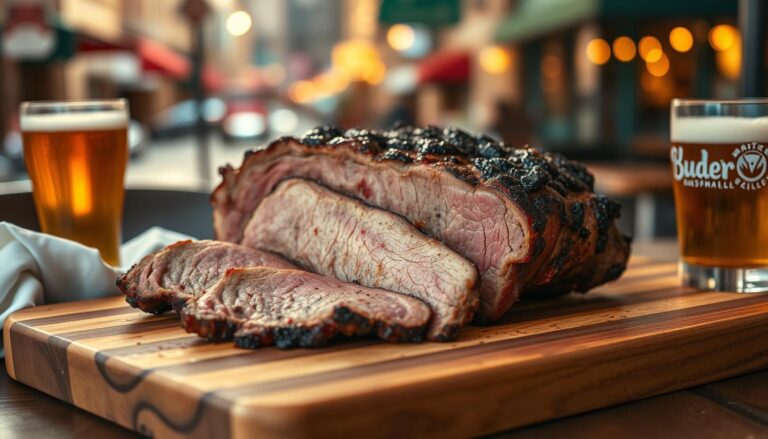
Aaron Franklin turned a modest Austin smokehouse into the national yardstick for brisket. His work made many home cooks and pros rethink how simple ingredients and steady technique deliver consistent results.
James Beard Best Chef recognition and the Austin legend
Winning the James Beard Best Chef: Southwest marked a turning point. When aaron franklin took that honor, it helped place barbecue alongside fine‑dining achievements and validated low‑and‑slow as serious cooking.
Franklin’s “just salt and pepper,” wood-over-charcoal ethos
Keep it simple. Franklin’s seasoning philosophy trusts quality meat and a light crust of salt and pepper so smoke and beef shine. He favors wood over charcoal for cleaner smoke and truer flavor.
Turning up the heat and learning from daily cooks
Franklin advises patience but also flexibility. Cooking in the 200–250°F range is fine—he often tells teams to “turn up the heat” when needed to hit targets.
He leads by watching fires, feeling meat texture, and coaching cooks in real time during service. Consistent fire management and good ingredients deliver repeatable, high‑quality brisket that others try to emulate.
- Standard‑bearer: franklin barbecue set the bar for consistency and quality.
- Method over gadgets: basics first—quality meat, steady fire, simple seasoning.
- Teaching culture: he learns from daily cooks and shares practical, heat‑focused guidance.
Myron Mixon and Jack’s Old South: the winningest man in BBQ
With precision and grit, Myron Mixon made Jack’s Old South a competition dynasty. His record reads like a trophy case: more than 180 grand championships, roughly 30 state championships, 11 national titles, and over 1,700 trophies. That haul explains why many call him the winningest competitor in the sport.
Grand championships, state titles, and TV influence
Mixon’s reach went beyond contests. He appeared as both competitor and judge on BBQ Pitmasters, shaping how viewers see scoring and standards. His stage time turned competition techniques into lessons that home cooks could follow.
Fire management and thermometer-first discipline
His credo is simple: steady heat and measured doneness. Mixon insists on a meat thermometer first—hit the internal temp every time to ensure tenderness and safety.
Fire control prevents recipe drift. Consistent pit temps keep timelines predictable and stop overcooking or undercooking.
- Early career note: he placed third in a pork shoulder challenge, then refined timing and process.
- Team coordination at Jack’s Old South turned plans into repeatable wins.
- Adopt his basics—stable temps and accurate doneness checks—to improve backyard results.
Melissa Cookston: the winningest woman in barbecue
From whole-hog runs to restaurant kitchens, Melissa Cookston combined relentless discipline with smart systems.
Her contest record reads like a study in consistency. She is a two-time Grand Champion at Memphis in May and the only person to win the World Hog Championship three years in a row.
Memphis in May crowns and World Hog dominance
Those wins proved mastery of timing, seasoning, and large-format temperature control. Her three-peat at World Hog underscores whole-hog technique that few teams sustain.
Cookston scaled contest success into business. She runs multiple Memphis BBQ Co. locations and translated championship methods into reliable restaurant operations.
- She authored Smokin’ in the Boys’ Room to pass on contest-tested tips for home cooking.
- Her leadership shows how food championships can shape menu development and training.
- As a chef and mentor, she inspires new cooks to study timelines, seasoning balance, and texture in big cooks.
Johnny Trigg, Smokin’ Triggers: the Godfather of Barbecue
Johnny Trigg’s reputation rests on decades of steady wins and a steady hand at the smoker. He earned a unique spot in competition history and in the culture that surrounds competitive BBQ.
Jack Daniel’s World Championship Invitational legacy
Trigg and his Smokin’ Triggers team are the only two-time Grand Champions at the Jack Daniel’s World Championship Invitational. That rare world-level achievement set a benchmark for competitors everywhere.
“Consistency wins contests — not luck.”
He is a Barbecue Hall of Fame inductee and a frequent presence on BBQ Pitmasters. Those honors validate decades of excellence and teaching.
- Rib technique: precise flavor layering and texture control that judges reward.
- Turn-in finesse: consistent plating and timing for repeatable scores.
- Cultural role: a mentor who helped shape how food is judged on the circuit.
| Achievement | Impact | Takeaway |
|---|---|---|
| Two-time Jack Daniel’s Grand Champion | World-level credibility | Build repeatable processes |
| Barbecue Hall of Fame inductee | Long-term recognition | Respect craft and history |
| Frequent TV appearances | Shared methods with wide audience | Emphasize show-ready consistency |
For aspiring cooks: study Trigg’s focus on repeatability, precise timing, and finishing details. Those small practices move backyard cooks toward competition-ready results and keep the craft moving forward.
The Mueller lineage and Texas tradition
In Texas, a single storefront can carry decades of technique and family memory. The Louie Mueller name grew from a local smoke joint into a touchstone for how Central Texas cooks brisket and runs a restaurant for the long haul.
Louie, Bobby, and Wayne at Louie Mueller BBQ
The family story spans three generations. Louie began the place, Bobby preserved the recipes, and Wayne keeps the line moving today.
Bobby Mueller earned a James Beard “America’s Classics” nod in 2006 for protecting regional food heritage across years. That honor helped seal the restaurant as a cultural landmark.
Frederick Louis Fountaine’s impact
Frederick Louis Fountaine worked decades behind the smoker. His brisket technique and a near‑legendary sauce influenced how many cooks think about trimming, smoke, and finish.
His methods even shaped Aaron Franklin’s approach, linking old‑school craft to modern brisket benchmarks. Texas Monthly has often highlighted this continuity as proof of lasting quality.
- Daily rhythm: wood fires, texture checks, and steady pacing keep service smooth.
- Small details: wood choice, precise trim, and slicing angle turn good meat into great.
- Legacy blueprint: careful handoffs across years keep the soul of the place intact.
More icons who defined the craft
Beyond trophies, a handful of individuals changed how people learn and love smoked meat. Their work spans contest strategy, restaurant rhythm, TV storytelling, and best-selling books that teach technique.
Chris Lilly and Big Bob Gibson’s Memphis in May mastery
Chris Lilly is the only five-time champion of Memphis in May and is also author of Big Bob Gibson’s BBQ Book. His recipes and methods shaped how competitors handle ribs and pork shoulder on the circuit.
Mike and Amy Mills: 17th Street Barbecue and a Hall of Fame legacy
Mike Mills is a Barbecue Hall of Fame inductee with multiple Memphis in May wins and a Jack Daniel’s World Invitational Grand Champion title. With Amy Mills he co-authored a James Beard–nominated book that many call best seller caliber.
Moe Cason’s self-taught path from Navy to national TV
Moe Cason moved from U.S. Navy service to self-taught pit work, then to TV judging on BBQ Pit Wars. He built retail rub lines and retail partnerships that brought his techniques into grocery aisles.
Tootsie Tomanetz of Snow’s and Texas Monthly acclaim
Tootsie Tomanetz earned praise from Texas Monthly for her wood-fired discipline and long mornings at Snow’s. That local devotion made her a national symbol of small‑town craft.
John Markus: elevating story and reach
John Markus created BBQ Pitmasters, a show on Destination America that helped viewers understand meat timing, judging, and the human stories behind food championships. His work hooked new fans who then sought books, classes, and festivals—from small joints to New York references like Katz’s pastrami in cultural conversation.
- These icons mix technique and personality to teach practical recipes for home cooks.
- Competition pork shoulder methods influence many step-by-step backyard guides.
- Explore their books and classes to translate championship knowledge into reliable results.
Signature secrets and techniques from BBQ pitmasters
Great BBQ starts with a few disciplined choices that shape every cook’s result. These tips focus on seasoning, steady temps, and a few modern tools to make cooks more consistent.
Salt, pepper, and quality meat selection
Keep it simple: a light crust of salt and pepper lets smoke and beef shine. For brisket, choose well‑marbled cuts and trim for even cooking. For pulled pork, pick shoulders with balanced fat for moist shredding.
Wood over charcoal and managing consistent fire
Many pros prefer wood for cleaner smoke and deeper character. Pick hardwoods—oak for balance, hickory for punch, fruit woods for mild sweetness.
Aim for steady, clean-burning conditions rather than chasing spikes; steady fire makes cooking times predictable.
Digital thermometers, 2‑zone cooking, and reverse sear
Use digital thermometers to monitor both pit and internal temps. Try 2‑zone cooking: roast gently on the cool side, then finish with a reverse sear over high heat to crisp the surface without overcooking.
Ember‑grilling for primal flavor
Ember-grilling places food briefly on glowing coals for dramatic char and unique taste. Practice vent control, wood management, and timing to build these essential skills.
- Log cooks and tweak one variable at a time.
- Be patient: rest and carryover heat finish the job.
- Experiment, record results, and grow your recipes and confidence.
Competitions, media, and the Barbecue Hall of Fame
Media coverage and contests together rewired how the public values smoked meat. Television, magazines, and awards turned a regional craft into national conversation. That shift changed where people dine and what cooks aim to learn.
From Destination America’s BBQ Pitmasters to Texas Monthly spotlights
BBQ Pitmasters on Destination America brought the heat of competition into living rooms and made scoring, technique, and personalities easy to follow.
Features in Texas Monthly can send lines around the block and raise a joint to national fame. Editors and lists often point readers to one small place that becomes a must-visit.
How awards like James Beard shaped public perception
Aaron Franklin’s James Beard Best Chef: Southwest nod proved that low‑and‑slow belongs beside fine dining. That recognition helped restaurants like Franklin Barbecue reach new audiences.
The Barbecue Hall and barbecue hall fame honors preserve heritage and reward long careers. Induction recognizes lifetime impact and teaches future cooks about standards and history.
- TV and magazines expand reach from local to national and even New York readers.
- Author pitmasters and chefs publish guides that teach judges, competitors, and home cooks.
- World barbecue festivals create global exchanges on wood, technique, and style.
“Media, awards, and halls together raise standards and push cooks to do better.”
Advice for aspiring competitors: study media coverage and best barbecue lists to learn scoring, categories, and what wins today. Use those signals to shape practice and presentation.
How to learn from the greats and elevate your own BBQ
Small, steady improvements add up. Treat every cook as a lesson. Watch what top cooks do, then try a single change the next time you fire up the smoker.
Practice, patience, and a positive pit attitude
Keep a calm mindset. Aaron Franklin praises daily learning and real-time coaching. A patient, positive attitude helps you stay focused when things shift.
Building skills: fire control, timing, and repeatable processes
Log each cook: note time, temps, wood, and outcome. Myron Mixon stresses thermometers and steady fire. Steven Raichlen’s rule—keep it hot, clean, lubricated—is a good checklist starter.
- Practice one or two things per cook (trim, fire control).
- Use simple checklists so processes become repeatable today and next weekend.
- Choose quality meat and clean fuel—great results start with good inputs.
“Manage fire proactively, not reactively.”
Actionable goals: pick a cut, plan your timeline, give yourself enough time, and log the results. Over weeks, your experience and skills will grow—and your bbq will show it.
Conclusion
Across towns and contests, a shared respect for meat and smoke ties today’s cooks to past masters.
Aaron Franklin reset the brisket bar while Myron Mixon defined competitive excellence. Teams like Jack Old South and figures such as Johnny Trigg kept traditions alive over years, shaping world barbecue and local place identity from small pits to New York discussion.
Take a page from the champions: steady temps, simple seasoning, and clean fire lift any cook’s results. Try one technique on your next brisket or rib, log the outcome, and repeat—barbecuing improves with time.
Celebrate the community spirit that drives this food. The legacy of these pitmasters and the books (many best seller favorites) keeps the craft moving forward, and your next cook can carry the torch today.