Authentic Southern BBQ: Mouthwatering Dishes to Savor
Set the table for a friendly, craveable tour of classic smoke and sauce. This short guide maps the South from North Carolina…
Set the table for a friendly, craveable tour of classic smoke and sauce. This short guide maps the South from North Carolina pulled pork to Texas beef ribs, with stops at Memphis for charred ribs and Alabama for chicken with white sauce.
Expect clear tips on what to order first, which sides complete the plate, and how sauces change every bite. We mix timeless staples like Brunswick stew and white bread with modern spins such as tequila-glazed St. Louis ribs and Cajun shrimp mac and cheese.
Along the way you’ll learn texture and flavor cues — low-and-slow tenderness, the prized char on ribs, and tangy vinegar mops. We also point to well-known restaurants and recipes so you can try a version at home or plan a tasting trip across states.
Key Takeaways
- This guide helps you taste regional signatures from North Carolina to Texas.
- Know what to order first: pulled pork or ribs, and which sides to pair.
- Classic staples like Brunswick stew and banana pudding anchor the experience.
- Look for texture cues: low-and-slow pork, charred Memphis ribs, tangy vinegar sauce.
- Find quick recipe cues and restaurant notes to recreate favorites at home.
What makes a Southern barbecue dish “authentic” today
What people call real BBQ often boils down to three things: the cut you pick, the time you leave it on the fire, and the sauce you use. These parts shape both flavor and identity. Tradition and local taste guide choices from pit to plate.
Regional roots: sauces, cuts, and cooking low and slow
In north carolina, eastern cooks use whole hog, chopped very fine, with a pepper-vinegar mop. Piedmont style favors shoulder and a ketchup-tinged vinegar finish. Memphis ribs show splotches of black char — a sign of proper smoke contact and heat control.
Time matters: frequent mopping, wood choice, and rest before slicing change a result. Ask about house-made sauce and slaw to get a truer picture of a region.
The plate: meat, sauce, white bread, slaw, and classic sides
A classic plate pairs meat with a pour or mop of sauce and a slice of soft white bread to sop juices. A crunchy slaw adds texture; Brunswick stew or hushpuppies make the side count. Proper stew is thick enough to eat with a fork and lifts the main.
The humble sandwich becomes a signature when pork, slaw, and the right bun work together. Small choices — chop size, mop frequency, and resting time — turn a good recipe into a great barbecue dish.
Authentic southern barbecue dishes you can’t skip
Begin with three must-try stops that reveal how meat, mop, and char change the experience.
North Carolina pulled pork sandwiches with vinegar sauce and slaw
Start in north carolina with a pulled pork sandwich that balances pepper-vinegar zip and rich pork. East-coast spots favor whole-hog, which brings a wetter texture.
West Piedmont cooks use shoulder and a ketchup-tinged vinegar sauce for a milder finish. A crown of finely chopped slaw adds crunch and keeps each bite tidy.
Memphis-style ribs and the art of the char
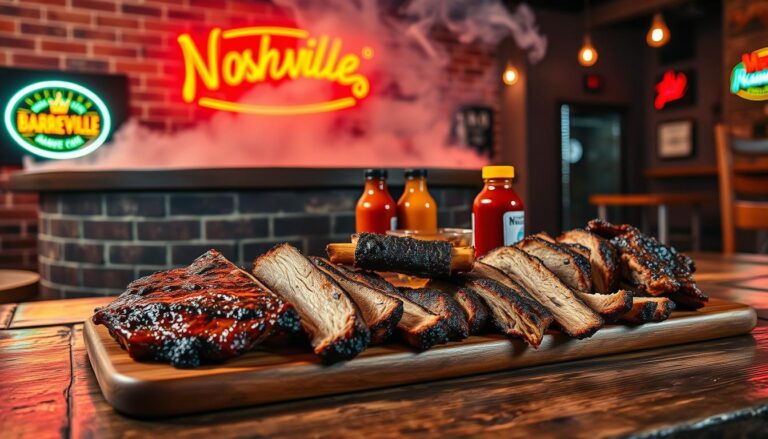
Memphis ribs earn respect for a splotched black char — a sign of controlled heat and skilled smoke. Pitmasters often marinate (sometimes with fruit juice) and mop-baste for hours.
Watch the bark: ribs should bite cleanly with a slight tug and carry layered flavor from repeated basting.
Texas-sized beef ribs that steal the spotlight
In Texas, beef ribs are spectacle and supper. These long bones hold large swaths of meat and a deep smoke ring. Order a single beef rib with brisket if you want both texture and show.
Home-cook nudge: use a simple salt-and-pepper rub on beef ribs, keep low heat, then finish with a light glaze to protect the bark.
- Mini itinerary: day one for NC sandwiches, evening two for Memphis ribs, weekend stop for Texas beef ribs.
- Ordering tip: pick wet or dry ribs in Memphis; pair a beef rib with brisket in Texas.
| Region | Signature Cut | Sauce Style | Texture Cue |
|---|---|---|---|
| North Carolina | Pulled pork (whole hog/shoulder) | Pepper-vinegar / ketchup-vinegar | Moist, finely chopped slaw crown |
| Memphis | Pork ribs | Wet or dry; layered mop | Splotched black char, clean bite |
| Texas | Beef ribs | Simple rub, light glaze | Large, jiggle with rendered fat |
Pork perfection: from pulled pork to St. Louis-style ribs
This section maps pork perfection—from pulled sliders to trimmed St. Louis ribs that shine.
Eastern vs. Western north carolina: whole hog, shoulder, and sauce styles
Eastern cooks favor whole hog, chopped fine and finished with a pepper-vinegar mop for a bright bite.
Western uses shoulder with a ketchup-tinged vinegar sauce for a slightly sweet version and a coarser chop.
Sweet Heat Cheerwine baby back ribs
Sweet Heat Cheerwine baby back ribs pair cherry soda and brown sugar to balance smoke and heat.
Glaze toward the end to set the sauce without burning and rest before slicing.
Guy’s St. Louis ribs with tequila BBQ sauce
Guy’s St. Louis ribs get a squared-off trim so they cook evenly and sauce cleanly.
The tequila BBQ sauce adds citrus lift to sticky, spiced ribs that play well with oak or hickory smoke.
Pulled pork sliders with apricot-kissed sauce
For parties, serve pulled pork sliders lacquered with an apricot-forward sauce. The fruit cuts the fat and brightens each sandwich.
- Home timeline: smoke shoulder low and slow until it shreds; glaze baby backs late; rest racks before serving.
- Serving tip: offer pickles, a simple slaw, and extra apricot sauce for dipping.
| Item | Key Feature | Cooking Note |
|---|---|---|
| Whole hog (Eastern) | Pepper-vinegar finish | Chop fine; thin vinegar mops |
| Shoulder (Western) | Ketchup-tinged vinegar | Coarser chop; slightly sweet |
| St. Louis ribs | Squared-off, even cook | Glaze late; slice clean for guests |
Chicken that rules the pit
From tangy mayo-based sauces to beer-and-honey marinades, chicken adapts to many bold grill styles. These methods keep the bird juicy and let sauce and smoke play well together.
Alabama white sauce with chicken (and why it works)
White sauce is mayo-based with vinegar, horseradish, and mustard. It cuts through fat, clings to the skin, and adds a bright tang that pops against smoke.
Serving tip: keep a cool bowl of sauce for the table and whisk it right before serving so it stays smooth and glossy.
Beer and honey BBQ chicken skewers
Marinate cubes in garlic, beer, honey, and soy for at least two hours; overnight is prime time for deeper flavor and tenderness.
For parties, mix thigh and breast pieces and alternate with peppers or onions. Test doneness at the thickest piece so smaller bites don’t dry out.
Grilled barbecue chicken and vegetables in foil
For a weeknight recipe, assemble chicken, sauce, and veg in a foil packet. The juices concentrate and cleanup stays easy.
Texture cue: pull chicken when just cooked through, rest briefly, then brush with reserved sauce to add sheen without burning sugars.
- Easy sides: bright slaw, cucumber salad, or white bread for mopping extra sauce.
- Safety note: always reserve a clean portion of sauce for finishing—never reuse raw marinade for brushing.
- Flavor tweak: a squeeze of lemon over finished chicken brightens the plate without masking smoke.
Beef and beyond: brisket cousins, burnt ends, and bold bites
Burnt ends rose from humble brisket trimmings to a star menu item, often finished with a sweeter glaze today. Trace them to Kansas City, where the barky outside of the brisket point was once a giveaway. Now pitmasters cube that fatty part on purpose and turn it into a smoky, caramelized treat.
Kansas City-born burnt ends and their modern “sweet” turn
Seek a classic rendition with balanced smoke and bark before sampling sugary versions. LC’s in Kansas City remains a go-to for traditional-style burnt ends.
Cut logic: the brisket point carries more fat, which helps cubes render and caramelize without drying out. Glaze lightly at the finish so the bark stays crisp.
Bacon bourbon meatballs as a smoky crowd-pleaser
For a party, serve bacon bourbon meatballs that mix ground beef, bacon, and a splash of bourbon. They pair well with ribs, brisket, or chicken and add a smoky-sweet starter to the spread.
- Serving tip: offer vinegary slaw or pickles to cut richness.
- Home method: smoke brisket point low and slow, cube it, return briefly with modest sauce until edges are tacky, not wet.
- Ordering tip: if you don’t want a full brisket, a single beef rib can deliver that big-beef hit by weight.
Seafood, Cajun sparks, and Gulf flavors on the grill
Gulf coast grills bring a bright, briny twist to the pit—shrimp shine when smoke meets citrus and spice.
Alabama white BBQ shrimp borrows the mayo-vinegar-horseradish mix used on chicken and gives seafood a cool, tangy counterpoint to grill char. Try a light brush of that white sauce after a quick sear to keep shrimp lively and glossy.
Saucy Creole shrimp for zesty nights
Saucy Creole shrimp add tomato-kissed heat and a touch of sweetness. Serve in a shallow pan so the sauce stays pooled for dipping. This version plays well with smoky mains and bright sides.
Cajun shrimp mac and cheese: comfort with a kick
Fold grilled, Cajun-seasoned shrimp into mac near the finish so they stay tender. Bake until bubbling for a shareable, deluxe comfort recipe that stretches the meal.
- Pairing tip: a crisp beer cuts spice and highlights shrimp sweetness.
- Service tip: offer lemon and extra white sauce in squeeze bottles so guests tune acid and richness.
- Mix one seafood option with pork or chicken to keep the spread balanced and light for non-red-meat eaters.
Sides that make the meal: stews, corn, okra, and bread
Sides turn a great plate into a full meal — they add contrast, comfort, and a reason to come back for seconds. Treat these items as essential partners, not afterthoughts.
Brunswick stew brings depth and sweetness that stands up to rich meats. A proper stew uses shredded chicken and pork, corn, potatoes, and butter beans in a sweet tomato base. Cook it low and slow until it’s thick enough to hold a spoon upright; that time pays off in concentrated flavor.
Classic corn and muffins
Creamed corn adds savory richness while honey cornbread muffins bring a touch of sweet crumbly comfort. Pair them for a simple contrast that complements smoky meat.
Okra, pickles, and crunchy options
Offer fried okra for green-and-gold crunch, or stewed okra with tomatoes for a lighter, tangy bite. Toss in fried pickles as a bar-snack twist that brightens the plate.
Bourbon peach baked beans
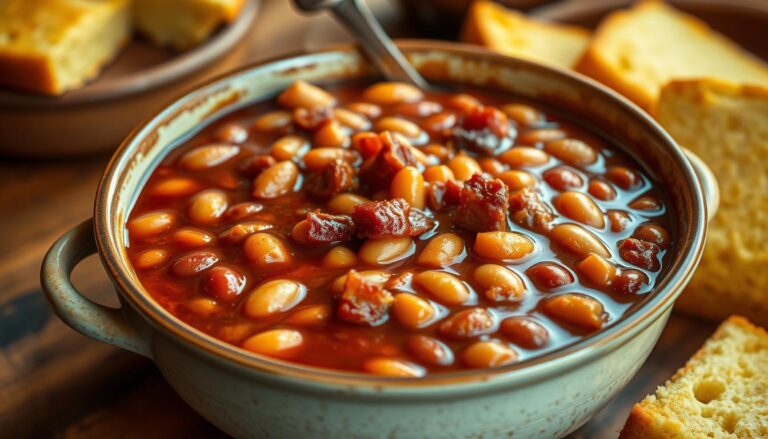
Stir bourbon and peach slices into baked beans for a sweet-smoky profile. The bourbon deepens flavor while peach adds fruit brightness — this pot makes a backyard staple memorable.
White bread: the essential mop
Don’t forget soft white bread. It’s the classic sauce mop and an edible napkin that catches drips. Whole-grain swaps are fine, but traditional white bread belongs on the platter.
“Batch the stew and beans a day ahead — they often taste better after resting, and you free grill time for ribs and chicken.”
- Serve stew and beans in small bowls; bread and muffins in baskets; fried items on lined trays to stay crisp.
- Label sides with key ingredients (bacon, dairy) so guests can mix and match confidently.
- If mains skew sweet, balance with a savory stew and a tangy slaw for contrast.
State-by-state icons to seek on your next BBQ trip
Build a shortlist of state icons—one bite that tells you where you are and why locals come back.
Alabama: look for chicken with white sauce. Try Big Bob Gibson’s and compare it with Miss Myra’s to hear how the tang and pepper balance shifts from pit to pit.
Carolina plates and picnic-ready sandwiches
North Carolina rewards a classic carolina barbecue tray: chopped pork, vinegar-pepper sauce, red slaw, and hushpuppies. Places like Lexington Barbecue and Red Bridges show regional differences clearly.
Missouri and St. Louis contrasts
Chase Kansas City burnt ends for deep bark and sticky glaze, then swing to St. Louis for local specialties such as toasted pork snacks and unique sides.
Texas: smoke, scale, and the perfect photo
Order brisket and a beef ribs plate for maximum impact. Top spots—Snow’s, City Market in Luling, or B. Cooper’s—often sell out early, so plan your trip around service times.
- South Carolina: hunt the hash—meaty stew-gravy often cooked in iron pots at places like Hite’s in Columbia.
- Virginia: time a visit to a firehouse chicken fundraiser to taste coal-basted bird and community grilling tradition.
- Oklahoma: try smoked bologna and hot links at classic restaurants such as Elmer’s in Tulsa to sample local sausage culture.
Tip: Don’t skip the sandwich: a pulled pork sandwich with slaw is a perfect road meal. Watch for regional bread and side cues—white bread in Texas, hushpuppies in north carolina, and stew traditions that cross borders.
| State | Icon to Order | Notable Spot | Why Go |
|---|---|---|---|
| Alabama | Chicken with white sauce | Big Bob Gibson’s / Miss Myra’s | Tangy, peppery contrast to smoke |
| North Carolina | Carolina barbecue tray / sandwich | Lexington Barbecue / Red Bridges | Chopped pork, vinegar sauce, red slaw |
| Missouri | Burnt ends / St. Louis specialties | KC smokehouses / local St. Louis spots | Bark-driven burnt ends; regional variety |
| Texas | Brisket + beef ribs | Snow’s; City Market (Luling); B. Cooper’s | Big beef, photo-worthy ribs, brisket depth |
Conclusion
Tasting a regional plate is like reading a map made of smoke, sauce, and seasonality. One lunch can show vinegar-tang in North Carolina, char-forward ribs in Memphis, or the show-stopping beef bones of Texas.
Remember the small things: Brunswick stew, hushpuppies, and soft white bread turn a meal into a memory. Let bark stay bark and let sauce support, not smother.
Try one new recipe from this guide and order one new regional item on your next trip. Build a short list of favorites and revisit them in another season to notice how smoke, spice, and produce shift.
Bookmark this piece, pack napkins, arrive early, and share your finds — local spots grow when people keep traditions alive and welcome fresh takes.